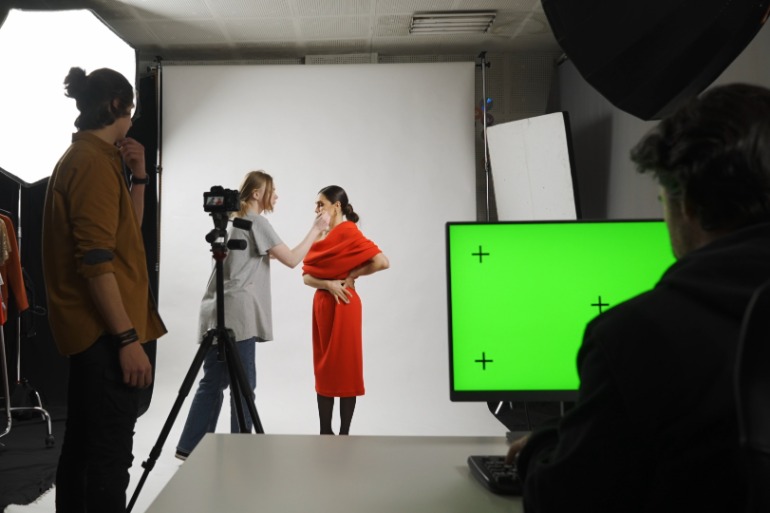
The dress looked perfect on the rack, then the model turns toward the lights, and a side seam starts twisting. The neckline shifts during a pose. Suddenly, the outfit needs more attention than anyone expected.
Fashion shoots don’t move straight from fitting to finished photograph. A stylist watches how the dress sits on a real body, then makes small corrections before the photographer takes another frame. A closer look at what stylists fix before a dress goes on camera shows why a tiny adjustment can change the whole shot.
Check the Fit Before the First Frame
On set, the first fitting goes beyond checking whether a zipper closes. The stylist asks the model to lift their arms and turn. If the side seam pulls toward the front, the dress might be sitting off-center. They reposition the garment before reaching for a pin.
A snug bodice also needs attention when the model changes posture. A smooth bodice might crease when the model leans against a chair. Stylists look for these changes early, since correcting a dress between every pose slows the shoot.
Bring the Waist Back Into Proportion
Clothing samples don’t always match the model’s measurements. For a front-facing photograph, a stylist might clamp extra fabric behind the dress. They remove excess fabric while preserving the intended silhouette.
Why the Camera Angle Matters
A clamp hidden behind the model in one frame might appear in the next. The stylist checks the camera position before placing anything, then adjusts the clamp for profile shots. Pull too hard, and the front develops diagonal creases. A quick view on the photographer’s monitor reveals the mistake.
Keep the Neckline Where It Belongs
A wrap dress might open slightly when the model leans forward. Rather than asking them to hold the dress closed, a stylist adjusts the overlap and tests whether a small piece of garment tape will keep the edge steady.
Tape works only when the adhesive suits the fabric and the wearer’s skin. For delicate material, the stylist might choose a discreet stitch or reposition the dress instead. The team usually confirms the model’s comfort before the next pose. No photograph looks effortless when the model spends the whole session worrying about a slipping neckline.
Give Sleeves Room To Move
A puff sleeve might collapse during a seated pose, while a fitted long sleeve might twist at the elbow. The stylist checks each arm after the model moves because the sleeve shape changes the dress’s overall balance. If one shoulder appears fuller than the other, they smooth or reposition the fabric before the photographer shoots.
Looking at different dress sleeve styles helps explain why these adjustments vary. A flutter sleeve needs room to fall naturally, meanwhile a structured sleeve typically needs to showcase its intended shape. Tugging without thinking distorts either design.
Watch the Hands, Too
When a model rests a hand on their hip, the sleeve might ride up. Stylists check the pose before tugging. Sometimes a small change in arm position solves the problem without disturbing the garment.
Smooth Wrinkles Before the Lights Find Them
Under studio lighting, folds that barely register in the fitting room create visible shadows. The stylist steams the front panel when the fabric allows. They keep steam away from makeup and let the dress dry before another shot.
Some materials mark easily. A hot iron can leave shine on certain fabrics, and even small water spots can ruin a delicate finish. Stylists follow garment care instructions and test unfamiliar materials in an inconspicuous area. When the problem comes from how the model sits, changing the pose might work better than steaming the same crease five times.
Catch What’s Showing Through the Dress
A low-back dress might reveal a bra clasp as soon as the model turns. Thin fabrics sometimes show underwear seams even when the fitting room mirror looks fine. The stylist checks the outfit under the actual lighting setup before making changes.
With the model’s approval, a different undergarment might help. However, a loose lining or misplaced shoulder seam might need attention instead. Stylists also typically check whether fabric turns transparent under bright light. A quick test photograph helps the team catch a problem before the final images reach the editor.
Make the Hem Work With the Shot
Long dresses introduce their own complications. A hem might bunch around the model’s shoes, hiding the footwear the editor wants to feature. The stylist spreads the skirt and checks its line through the lens. For a walking shot, they clear the fabric away from the heel so the model moves safely.
A temporary hem adjustment might help if the dress drags, but quick fixes shouldn’t damage a borrowed designer sample. Changing shoes or repositioning the model might work better. A floor-length hem also needs a different arrangement when the model sits for a portrait.
Test the Dress in Motion
The dress looks polished while the model stands still. Then they take three steps, and the skirt twists around one leg. A stylist often asks for a short walk or turn before the photographer starts shooting movement. They watch where the fabric catches and whether the neckline stays comfortable.
A breeze from a studio fan presents another test. Rather than simply turning up the airflow, the team adjusts the fan’s angle. Some fabrics float beautifully, while heavier designs need help settling between takes. Movement should highlight the garment’s design instead of forcing the model to fight the fabric.
Take One Last Look Through the Lens
Once the dress sits correctly, the stylist reviews a test image with the photographer. The monitor shows details that disappear when everyone views the outfit from across the studio. Before moving to the next look, they check a few things:
- Does the zipper lie flat after the last pose?
- Has a pin or clamp slipped into view?
- Does the hem reveal the intended shoes?
- Has a necklace caught on the neckline?
These checks continue throughout the shoot. A new pose often reveals another problem. Knowing what stylists fix before a dress goes on camera makes editorial fashion feel less mysterious. The best styling often looks effortless because someone caught the awkward details before you ever saw the photograph.