A classic wedding reception feels polished without looking overly formal, while a romantic celebration creates warmth through thoughtful details and an inviting atmosphere. The tables bring both qualities together because guests experience the décor up close throughout dinner and conversation. The best table decoration ideas for classic and romantic weddings balance elegance with softness, giving every place setting intention without making the room feel crowded.
From graceful linens to carefully chosen centerpieces, each element can support a cohesive look that feels timeless rather than trendy. By focusing on proportion, texture, lighting, and personal details, couples can create tables that complement the venue while making the reception feel intimate and beautifully considered.
Begin With a Refined Color Palette
A restrained color palette gives classic wedding tables an immediate sense of harmony. Ivory, cream, champagne, blush, and muted green can create a romantic foundation without competing for attention. Couples can introduce deeper shades through napkins or flowers when the room needs more contrast.
Instead of using every color equally, choose one dominant neutral and let an accent shade appear in selected details. This approach keeps the table visually calm and helps decorative elements feel connected. Warm wood, patterned carpet, stone walls, or dramatic drapery can influence how colors appear under reception lighting. A palette that responds to the room often feels more sophisticated than one designed separately from its surroundings.
Choose Linens That Add Softness
Linens create the backdrop for nearly everything placed on a reception table. Crisp white cloths offer traditional elegance, while ivory or subtly textured fabrics can make the setting feel warmer. For a romantic effect, consider tablecloths with gentle movement or a runner that adds dimension without covering the entire surface. A relaxed fold can make formal china feel more approachable, while a neat fold can reinforce a traditional aesthetic.
Linens should drape cleanly and remain comfortable for seated guests. When the linens and napkins together share a similar visual language, the setting feels deliberate without requiring excessive decoration.
Build Centerpieces Around Proportion
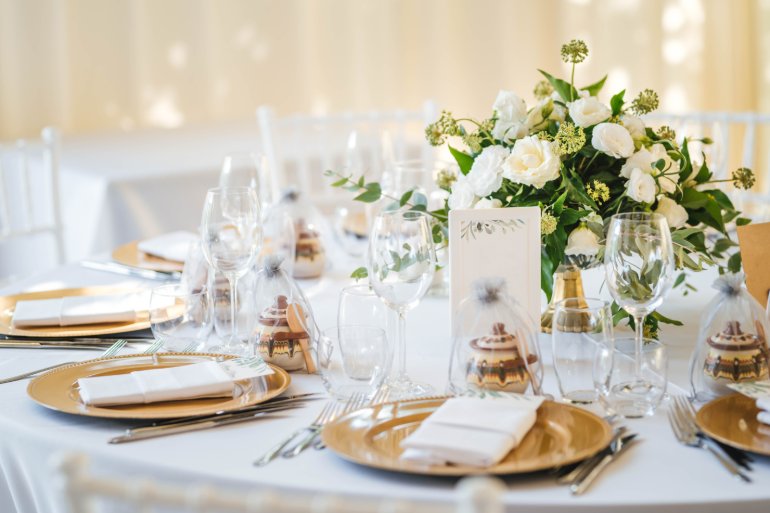
Centerpieces should enhance conversation rather than interrupt it. Low floral arrangements work especially well for long dinners because guests can easily see across the table. Taller designs can bring grandeur to a ballroom, but they should rise above eye level, so that sightlines remain open. The arrangement should also suit the table. A small centerpiece can disappear on a wide round table, while an oversized design may overwhelm an intimate setting.
Romantic florals often benefit from natural movement instead of rigid symmetry. Roses, ranunculus, hydrangeas, or seasonal blooms can feel timeless when arranged with restraint. Leave enough open space for glassware and shared dishes so beauty never comes at the expense of comfort.
Create Warmth With Candlelight
Candlelight changes the mood of a reception by adding movement and a flattering glow. Tapers in elegant holders can reinforce a classic style, while votives create smaller pools of light across the tabletop. One of the most creative ways to use candles is to vary their heights gently along the table, creating visual rhythm without forming a rigid pattern.
Keep flames safely separated from flowers and nearby paper goods. Venues may also have rules about open flames, so confirm requirements before selecting holders. If real candles are restricted, high-quality flameless options can still provide warmth. Glass or antique-inspired holders can support a romantic setting while allowing the light itself to remain the focus.
Make Place Settings Feel Intentional
A beautiful place setting does not need excessive layers. Start with the pieces guests will use, then add decorative touches that strengthen the overall design. Chargers can frame dinnerware and bring a formal note to the table, especially when their finish complements nearby candleholders or flatware. Glassware can add sparkle without introducing another decorative object. Menus and place cards also contribute to the composition, so their typography and overall scale deserve attention.
Position each item with enough breathing room to keep the setting comfortable. Oversized embellishments or bulky favors can make a place setting feel busy. When every piece serves a practical or meaningful purpose, the table looks refined and guests can settle in comfortably.
Use Flowers To Shape the Mood
Garden-inspired blooms with softly curved petals create a gentle atmosphere, while structured arrangements produce a more formal impression. Couples can blend these qualities by choosing traditional flowers and arranging them with looser movement. Seasonal availability can guide the design and help the flowers feel appropriate to the setting.
Rather than matching every arrangement exactly, maintain consistency through recurring flower varieties or similar vessel styles. This creates cohesion while allowing each centerpiece to have natural character. Strongly scented flowers may compete with the meal, so subtle varieties often work better near guests. The goal is beauty that supports the experience instead of dominating it.
Add Personal Details With Restraint
Personal touches give elegant tables a sense of identity. A handwritten place card can make each guest feel welcomed, while a family-inspired detail can connect the celebration to meaningful traditions. The key is restraint. Too many customized objects can shift the table from romantic to cluttered.
Select details that have a clear connection to the couple or the wedding experience. A monogram on a menu may feel polished, while a short note at each seat can add warmth. Favors can become part of the design when their packaging matches surrounding materials.
Let the Venue Guide the Final Look
A historic ballroom may call for traditional candleholders and tailored linens, while a garden venue may suit softer fabrics and organic floral shapes. Consider ceiling height, table spacing, natural light, and architectural details before making final décor decisions.
A centerpiece that looks substantial in a studio can appear small in a large reception hall. This perspective reveals whether arrangements block conversation or menus feel crowded.
A Timeless Finish for a Romantic Celebration
The most memorable reception tables create atmosphere through thoughtful choices rather than sheer quantity. Couples can combine polished foundations with softer details to achieve a setting that feels elegant and deeply personal.
When considering table decoration ideas for classic and romantic weddings, focus on how every element works within the room and supports the people gathered around the table. By choosing each detail with purpose, couples can create a celebration that feels cohesive and enduring while leaving room for genuine connection throughout the evening.