
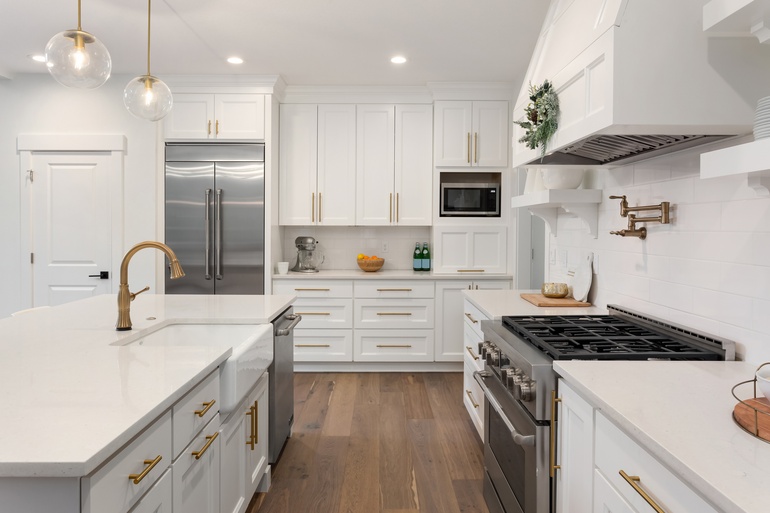
Designing a cohesive kitchen before your renovation is essential to ensure the space meets your style and functional needs. A well-thought-out kitchen can increase your home’s value and simplify everyday tasks. This guide outlines the key steps to create a harmonious kitchen design tailored to your tastes.
Begin With a Clear Vision
A cohesive kitchen starts with defining your design vision. Consider your home’s overall aesthetic and how you want the kitchen to complement it. Whether your style leans modern, rustic, or transitional, consistency in materials, colors, and finishes is critical. Gather inspiration from design magazines, Pinterest, or Instagram to solidify your preferences. Create a mood board combining these inspirations to track your ideas and ensure all design choices align.
Focus on Your Layout
An efficient layout is crucial to kitchen design. Think about how you use the space daily and plan cooking, prep, and storage zones that flow naturally. Identify your priorities, whether it’s maximizing storage or adding an island for entertaining. By ensuring functionality drives the design, you create a kitchen that’s beautiful and practical.
Choose Semi-Custom Cabinets for Flexibility
Cabinets play a central role in the design and practicality of your kitchen. Semi-custom cabinets are an excellent choice, offering a balance of style, flexibility, and budget-friendliness. They are available in a wide range of designs and finishes, allowing you to match them with your vision while providing enough customization for a tailored look. Semi-custom cabinets will enable you to amplify functionality by adding pull-out shelves or custom dividers without the cost of fully custom cabinetry.
Select Complementary Finishes
Achieving a cohesive design means carefully selecting countertops, backsplashes, and hardware that work together. Materials and colors should feel unified but not overpowering. If your semi-custom cabinets have a natural wood finish, opt for countertops in neutral tones and simple backsplashes to achieve balance. Consider contrasting finishes that tie together through complementing accent pieces for a more dramatic look.
Plan the Lighting
Lighting is an essential factor in kitchen design. To enhance functionality and ambience, incorporate a mix of ambient, task, and accent lighting. Pendant lights over the island or under-cabinet lighting can highlight your chosen materials and elevate the space. The right lighting ensures functionality while enhancing the overall aesthetic.
Designing your kitchen renovation requires attention to detail and a clear plan. By learning how to design a cohesive kitchen before your renovation, you set the stage for a successful transformation that reflects your personal style while offering timeless function.