Industrial conveyor belts are a vital component in the manufacturing and distribution sectors. These robust systems facilitate the efficient movement of materials across various stages of production or preparation.
Understanding their functionality, design, and maintenance requirements is crucial for optimizing productivity and minimizing downtime in industrial operations. Let’s look at the ins and outs of industrial conveyor belts and how they contribute to the smooth functioning of various industries.
Types of Industrial Conveyor Belts
Industrial conveyor belts come in a wide variety of types, each designed to cater to specific material and operational requirements. Some common types include:
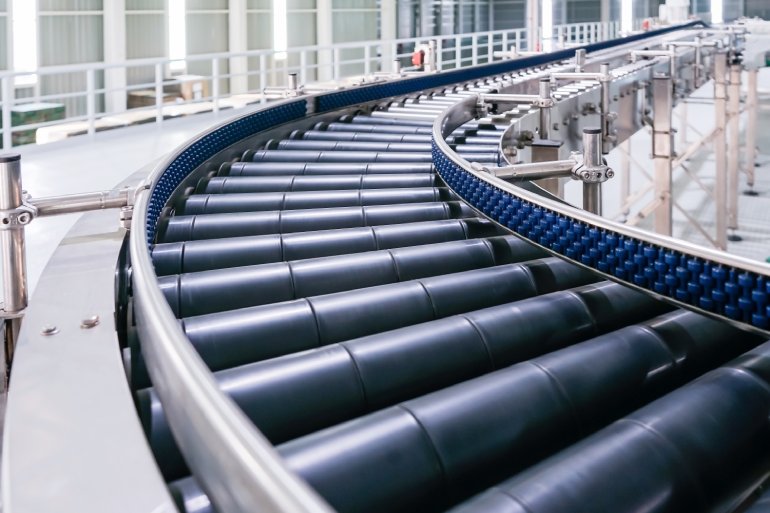
- Roller conveyors: These are the most basic type of conveyor belt, consisting of rollers mounted on a frame that allows materials to be moved manually or by gravity.
- Belt conveyors: As the name suggests, these conveyors use a continuous belt made from various materials such as rubber, fabric, plastic, or metal to transport materials.
- Chain conveyors: Similar to belt conveyors, these systems utilize chains instead of belts to move materials through different stages.
- Screw/auger conveyors: These are typically used to transport bulk materials such as grains, powders, and liquids through a cylindrical rotating screw.
- Overhead conveyors: These systems use overhead tracks or towlines to move materials horizontally or vertically in a warehouse or distribution center.
Conveyor Belt Components
The components of industrial conveyor belts are as diverse as the systems they support. At the heart of these conveyors is the belt or chain, which serves as the main surface that transports materials. The frame provides the structural backbone, ensuring stability and strength to support the materials being moved. Motorized or manual rollers and pulleys are essential for guiding and moving the belt or chain along the conveyor path; selecting the right head pulley design—such as a purpose-built head pulley on conveyor with reinforced lagging and corrosion-resistant materials—helps prevent belt slippage, reduce vibration, and extend bearing life in heavy-duty applications.
Additionally, control systems are integrated into modern conveyor belts, allowing operators to manage speed, load capacity, and directional flow efficiently. Various accessories such as side guards, diverters, and sensors can be added to customize the conveyor system to meet specific operational needs.
Maintenance and Safety
Proper maintenance of industrial conveyor belts is crucial for ensuring their longevity and effective operation. Regular inspections, cleaning, and lubrication are necessary to prevent malfunctions or breakdowns that can disrupt production schedules. Any signs of wear and tear should be addressed promptly to avoid more significant issues down the line. Learning how to properly clean a conveyor belt and its components is also essential for maintaining a safe and hygienic workspace.
Safety protocols must also be in place when working with conveyor belts. Adequate safety guards, emergency stop switches, and warning alarms should be installed to minimize the risk of accidents or injuries. Implementing these measures not only protects workers but also helps prevent costly downtime because of equipment damage or malfunction caused by neglect or misuse.
Industrial conveyor belts are a vital part of modern manufacturing and distribution processes, providing efficient and reliable transportation of materials. Understanding the different types, components, and maintenance requirements can help industrial operators optimize their productivity and ensure safe working conditions for employees. By continuously improving these systems’ design and functionality, we can expect to see further advancements in this critical component of industrial operations.