
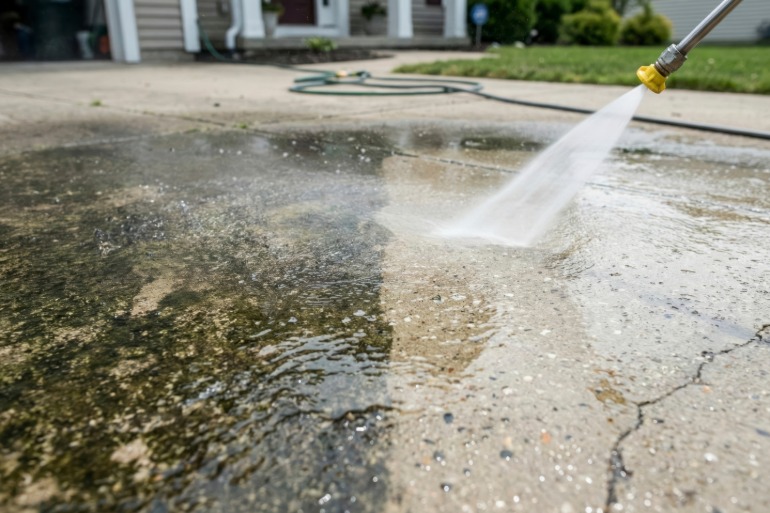
Keeping the outside of your home clean does more than improve curb appeal. Dirt, algae, mildew, and grime can build up over time and leave surfaces looking worn long before they actually need repairs. Pressure washing helps remove stubborn buildup quickly while helping you maintain decks, driveways, siding, and other exterior features. With the right approach, you can clean effectively without damaging your property or wasting time.
Start With the Right Pressure Setting
Every surface requires a different amount of pressure. Concrete can usually handle stronger pressure, while painted wood, vinyl siding, and outdoor furniture need a gentler approach.
Before you begin, test the pressure on a small, hidden section. Adjust the nozzle or pressure level until you find a setting that removes dirt without leaving marks or stripping paint. Taking a few extra minutes upfront can prevent expensive mistakes later.
Focus on the Dirtiest Areas First
Some parts of your home collect more grime than others. Walk around your property before you begin so you can identify areas that need the most attention.
Common places to clean include:
- Driveways and sidewalks
- Patios and decks
- Vinyl or brick siding
- Fences
- Garage doors
- Outdoor steps
Starting with the toughest spots allows you to use your energy while the equipment performs at its best.
Use Steady, Controlled Movements
Keep the spray wand moving instead of aiming at one spot for too long. Slow, overlapping passes create a more even finish and reduce streaks. Hold the nozzle at a consistent distance from the surface throughout the cleaning process.
You should also work from the top down whenever possible. Dirt and water naturally flow downward, so this method helps prevent you from cleaning the same area twice.
Know When Pressure-Washing Is the Better Choice
Garden hoses work well for rinsing away loose debris, but they struggle with stubborn stains, algae, and years of accumulated dirt. In many situations, pressure-washing is better than traditional hose methods because it delivers stronger cleaning power while reducing the amount of scrubbing you need to do manually.
Even so, stronger pressure does not mean you should rush through the job. Careful technique always produces better results than simply blasting every surface.
Protect Nearby Landscaping
Plants, flowers, and shrubs can suffer from strong spray or cleaning detergents. Cover delicate landscaping before you start if you plan to use any cleaning solution. Afterward, rinse nearby plants with fresh water to dilute any residue that may have reached them.
You should also move patio furniture, grills, decorations, and vehicles away from the work area whenever possible. A clear workspace makes the job easier and helps prevent accidental damage.
Keep Safety in Mind
Pressure washers produce powerful streams of water that deserve respect. Wear closed-toe shoes with good traction, along with eye protection, while you work. Stay aware of electrical outlets, outdoor lighting, and extension cords around the cleaning area.
Avoid pointing the spray at people, pets, or fragile items. If you need to clean high sections of your home, use extension tools instead of balancing on a ladder while operating the pressure washer.
Maintain a Regular Cleaning Schedule
Exterior surfaces stay in better condition when you clean them consistently instead of waiting until dirt becomes overwhelming. Seasonal pressure washing can help preserve your home’s appearance and reduce buildup before it causes staining or discoloration.
With the proper equipment, careful technique, and routine maintenance, pressure washing can keep your home’s exterior looking fresh while helping protect the surfaces you value most.