Small design details often have the greatest influence on how polished a home feels. Thoughtful lighting, well-proportioned cabinetry and consistent finishes can lift a room without changing its entire layout.
These upgrades also work across different interior styles, so you can introduce them gradually while keeping the broader look cohesive. Focus first on elements you see or touch every day, then use colour and material samples to check that each choice works with what’s already there.
Layer Architectural Lighting Carefully
Plan lighting around tasks, movement and atmosphere instead of relying on one bright ceiling fitting. A useful scheme combines ambient light for general visibility, task lighting over benches or reading chairs and accent lighting for artwork or architectural details.
Install dimmers where possible and keep colour temperatures consistent. Warm white light around 2700K to 3000K suits most living areas, while slightly cooler light can help with detailed kitchen tasks. Concealed LED strips beneath overhead cabinets create a clean pool of light without visible glare. They’re one of several easy home updates that can change how a room feels without requiring a major rebuild.
Invest in Tailored Cabinet Profiles
Cabinet proportions shape a kitchen or living area more than their colour alone. Slim shaker profiles add quiet detail, while flat fronts create a cleaner contemporary finish. Whichever style you choose, repeat rail widths, shadow lines and panel spacing across the room so the cabinetry reads as one considered design.
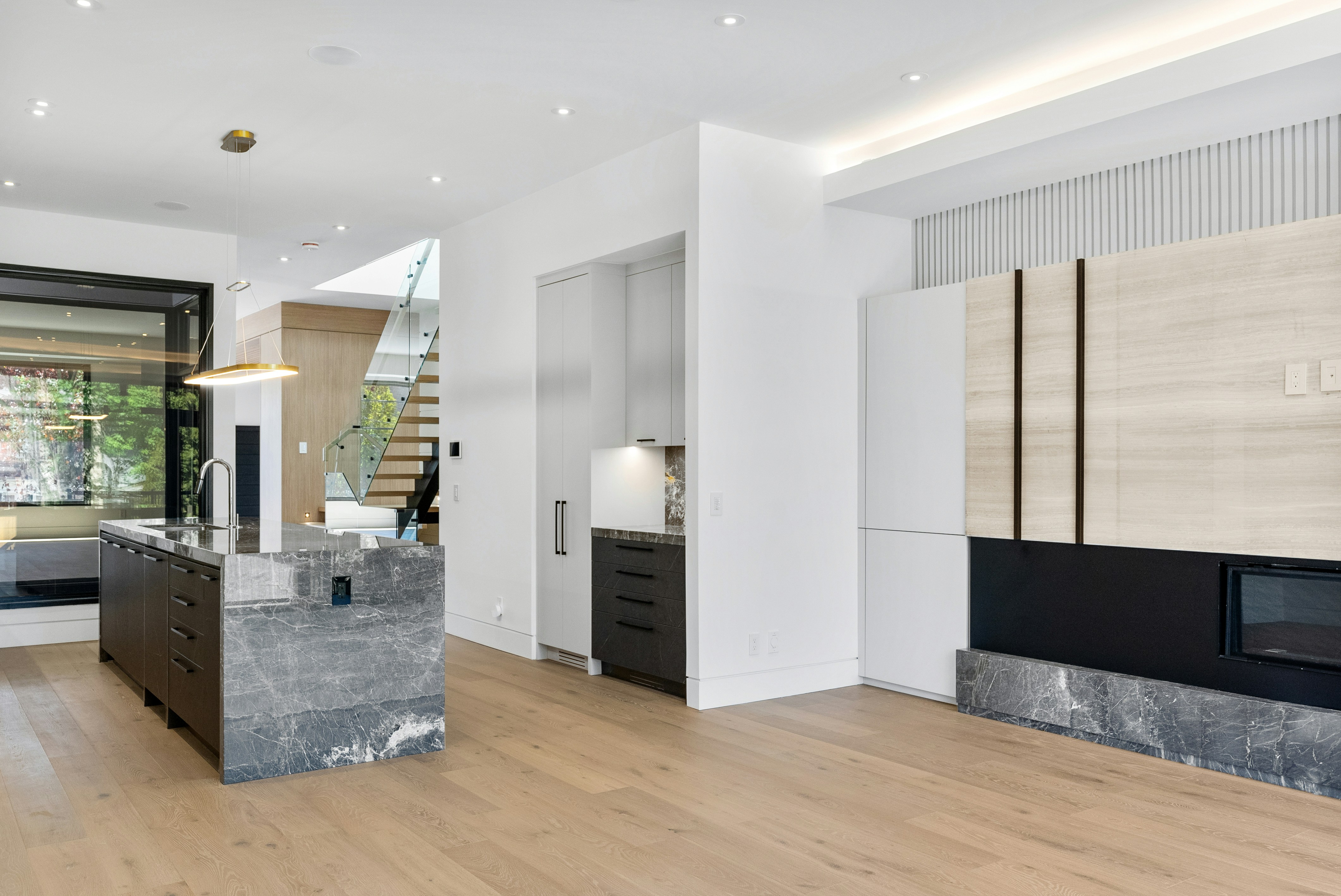
For larger kitchen renovations, custom cabinetry can resolve awkward corners, uneven walls and storage gaps that standard units may leave behind. Ask to see a 3D render before manufacturing begins, then check appliance clearances, drawer access and handle positions. Extending cabinetry to the ceiling can also eliminate dust-catching gaps and give the room a more finished appearance.
Introduce Organic Stone Elements
Natural stone brings subtle movement into rooms filled with straight lines and smooth painted surfaces. A small amount can be enough. Consider a limestone side table, a travertine shelf or a marble splashback with restrained veining.
View full-size slabs or several samples in your home before deciding, since natural variation can be significant. Check them in morning and evening light alongside your flooring, cabinetry and wall colour. Porous materials may also need sealing, particularly around sinks and food preparation areas. If maintenance is a concern, use stone on lower-contact surfaces or choose a quality engineered alternative. Among common home upgrade ideas, material changes have an especially visible effect because they introduce texture as well as colour.
Upgrade Everyday Hardware and Taps
Handles, knobs and taps are small enough to update easily, yet they appear repeatedly across a room. Choose a finish that relates to existing elements such as light fittings, window frames or appliance trims. The metals don’t need to match exactly, but their undertones should sit comfortably together. Brushed nickel, for example, generally pairs more naturally with cool greys, while aged brass complements warmer timber and cream tones.
Measure existing handle centres before ordering replacements so you can reuse the current holes. For taps, check the available pressure, mounting configuration and reach over the basin. A spout that projects too little can send water onto the benchtop, while an oversized model may dominate a compact sink.
Create Cohesive Flooring Transitions
Flooring transitions deserve attention because they sit directly in common sightlines. Where timber meets tile or carpet, aim for similar finished heights and use the narrowest suitable transition strip. A flush junction looks refined and reduces the chance of catching a shoe or vacuum head on a raised edge.
Keep adjoining floor colours connected through a shared undertone. Pale oak might work with warm limestone-look tile, while a cooler grey timber finish can suit blue-grey porcelain. Lay sample boards across the doorway and view them from both rooms before ordering. Direction matters too. Continuing boards towards the main source of natural light can make the space feel longer and guide the eye cleanly between zones.
The strongest result comes when these details speak the same visual language. Repeat one warm metal, one timber tone or one crisp profile across nearby rooms, then let the materials provide the variation. That quiet consistency is what makes an upgraded interior feel settled from the moment you enter.